Napster Spaces was an AI-powered CMS product built at the intersection of Obsess's immersive commerce platform and Napster's post-acquisition push into AI. The product allowed any brand to generate and publish an AI-driven spatial experience from a URL or a prompt. I co-led product design and UX alongside another product designer, working under the Senior Creative Technologist who led the overall project, with close collaboration across engineering and product stakeholders on both the Obsess and Napster sides.
Company
Napster
Timeline
2025
—
2025
Role
Product Designer · UX · Creative Strategy

Project overview
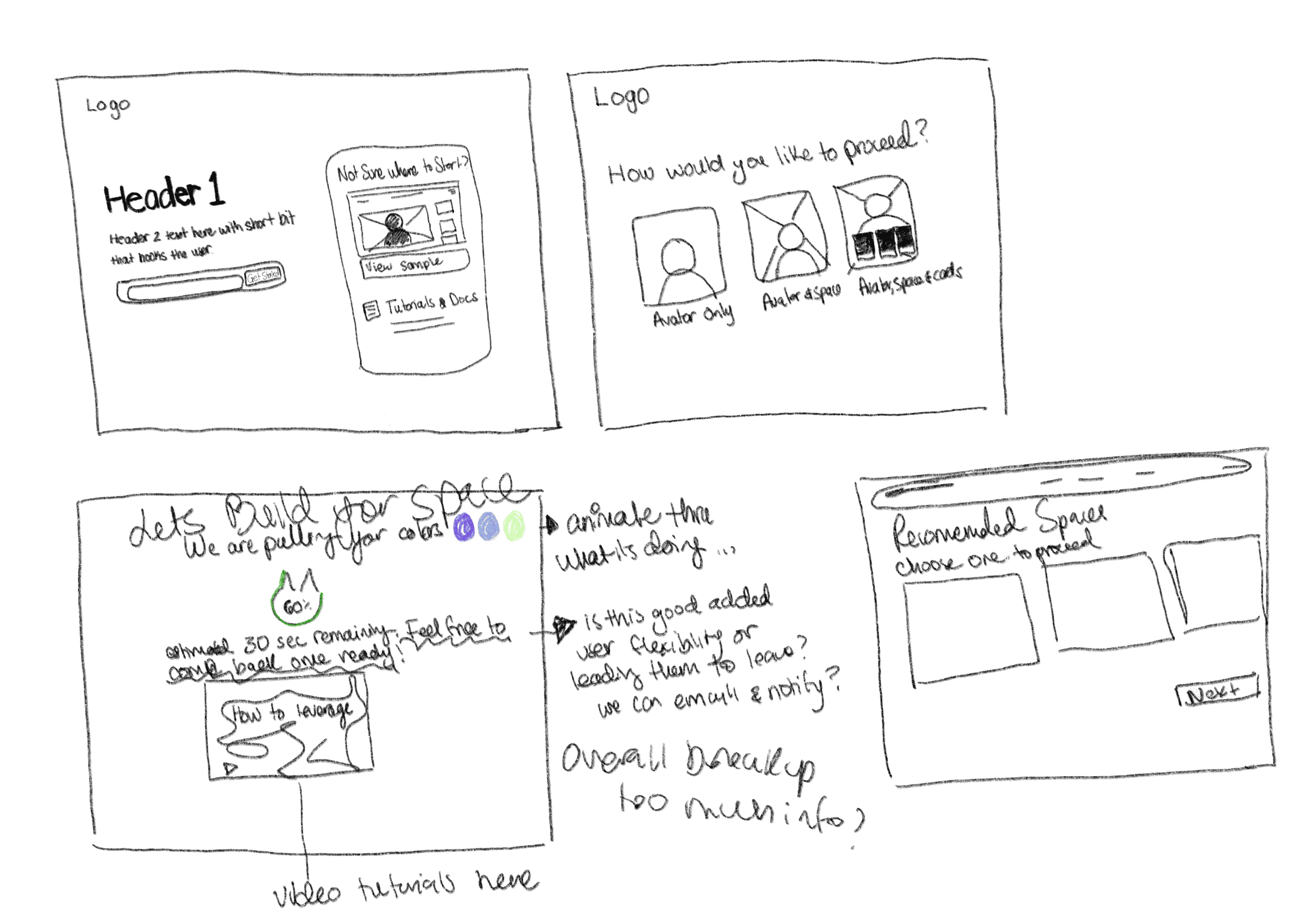
I co-led product design and UX for Napster Spaces across the full development cycle, partnering closely with a fellow product designer throughout. The work started with competitive analysis of tools like RunwayML, HeyGen, Synthesia, and OpenArt to understand where the market was heading and where the real gaps were. From there we moved into ideation, sketching wireframes by hand with reasoning annotated directly on the page, thinking through onboarding flows, URL input logic, space generation states, and how a brand would move from zero to a published experience in the fewest possible steps.
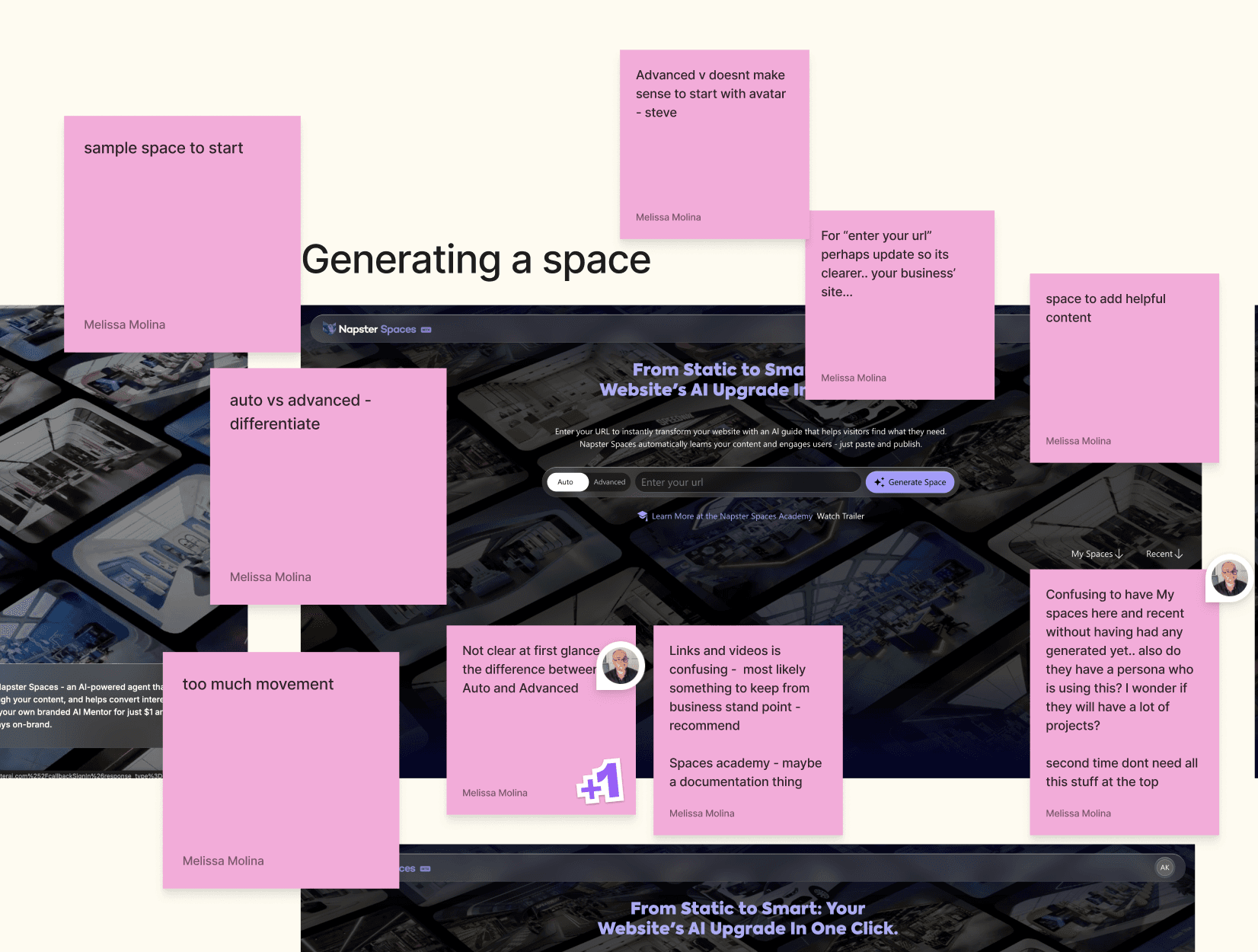
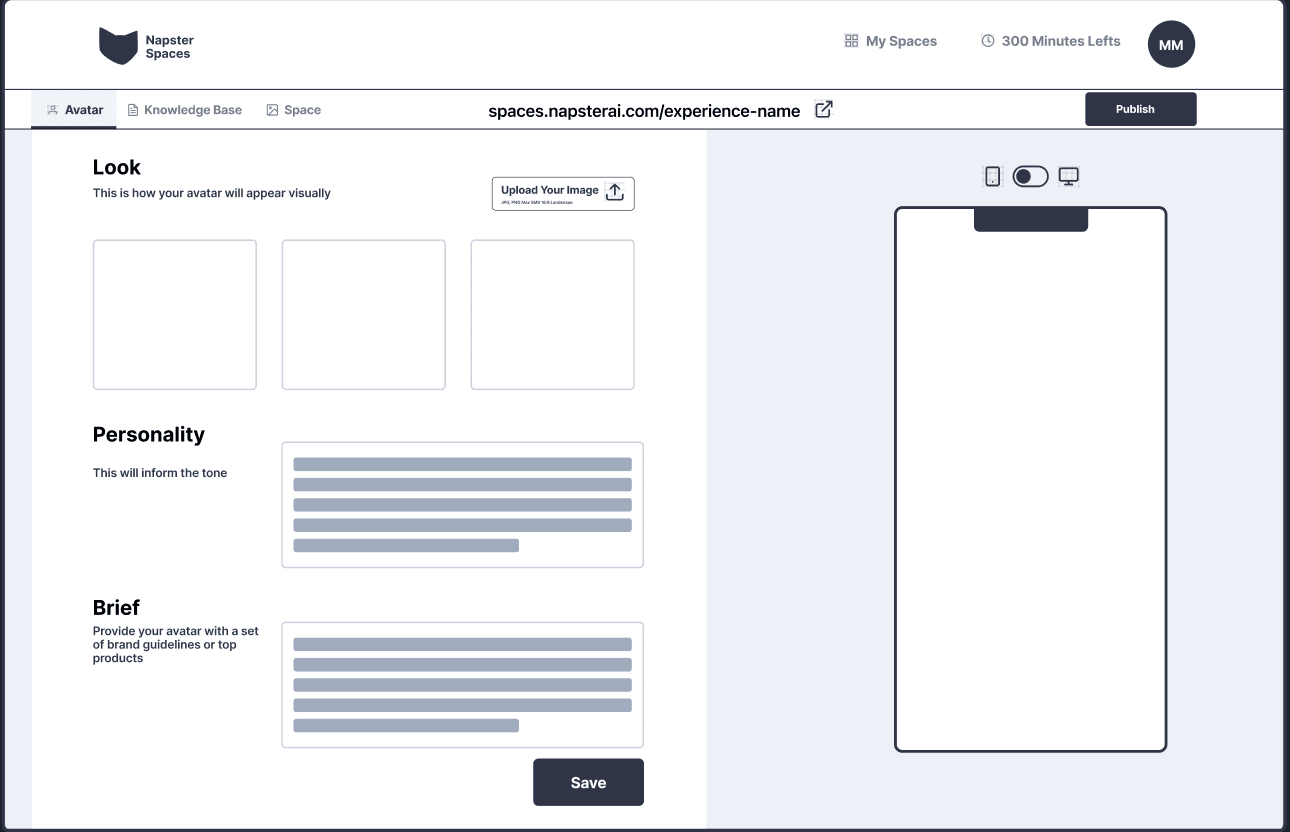
The critique and iteration phase happened live in FigJam with the broader team, working through friction points together, pressure testing assumptions, and pushing the UX until it earned its decisions rather than just looked good. I contributed to the full interface including the Knowledge Base configuration, avatar setup, Shopify product data integration, FAQ and deflection flows, and the space generation and preview experience. The Auto versus Advanced distinction was one of the more nuanced UX problems on the project, designing for two very different user mental models inside a single onboarding flow without making either feel like a compromise.
The shipped product included a live Shopify integration that pulled product data in real time, a Knowledge Base system that let brands train their AI space on their own content, and a space generation experience that went from URL input to live preview in under a minute.
Challenges
The product had to serve brands who wanted full automation and brands who wanted granular control, and those two users have almost nothing in common in terms of how they think about a tool like this. Designing a single onboarding flow that felt right for both without overwhelming either required a lot of rounds and genuine collaboration between the design team and stakeholders. The Auto versus Advanced distinction went through multiple critiques before it landed. Operating inside a post-acquisition restructure while still shipping a real product required clear communication and constant adaptability.
Results
Shipped product with live Shopify integration, Knowledge Base configuration, and AI space generation. The Leverage AI Spaces hero experience went live as the product's primary acquisition surface. The onboarding and space generation UX became the foundation for how Napster Spaces presented itself to new users.


Napster Spaces was an AI-powered CMS product built at the intersection of Obsess's immersive commerce platform and Napster's post-acquisition push into AI. The product allowed any brand to generate and publish an AI-driven spatial experience from a URL or a prompt. I co-led product design and UX alongside another product designer, working under the Senior Creative Technologist who led the overall project, with close collaboration across engineering and product stakeholders on both the Obsess and Napster sides.
Company
Napster
Timeline
2025
—
2025
Role
Product Designer · UX · Creative Strategy
Project overview
I co-led product design and UX for Napster Spaces across the full development cycle, partnering closely with a fellow product designer throughout. The work started with competitive analysis of tools like RunwayML, HeyGen, Synthesia, and OpenArt to understand where the market was heading and where the real gaps were. From there we moved into ideation, sketching wireframes by hand with reasoning annotated directly on the page, thinking through onboarding flows, URL input logic, space generation states, and how a brand would move from zero to a published experience in the fewest possible steps.
The critique and iteration phase happened live in FigJam with the broader team, working through friction points together, pressure testing assumptions, and pushing the UX until it earned its decisions rather than just looked good. I contributed to the full interface including the Knowledge Base configuration, avatar setup, Shopify product data integration, FAQ and deflection flows, and the space generation and preview experience. The Auto versus Advanced distinction was one of the more nuanced UX problems on the project, designing for two very different user mental models inside a single onboarding flow without making either feel like a compromise.
The shipped product included a live Shopify integration that pulled product data in real time, a Knowledge Base system that let brands train their AI space on their own content, and a space generation experience that went from URL input to live preview in under a minute.
Challenges
The product had to serve brands who wanted full automation and brands who wanted granular control, and those two users have almost nothing in common in terms of how they think about a tool like this. Designing a single onboarding flow that felt right for both without overwhelming either required a lot of rounds and genuine collaboration between the design team and stakeholders. The Auto versus Advanced distinction went through multiple critiques before it landed. Operating inside a post-acquisition restructure while still shipping a real product required clear communication and constant adaptability.
Results
Shipped product with live Shopify integration, Knowledge Base configuration, and AI space generation. The Leverage AI Spaces hero experience went live as the product's primary acquisition surface. The onboarding and space generation UX became the foundation for how Napster Spaces presented itself to new users.